When Purpose Meets Profit
Updated: Aug 30
For decades, businesses were encouraged to view profit and purpose as opposing forces.
One was associated with commercial success, shareholder value, and growth. The other was often reserved for charities, nonprofits, or corporate responsibility initiatives that existed alongside the core business. The assumption was simple: if an organisation wanted to create positive impact, it would likely need to sacrifice commercial performance in return.
Today, that thinking feels increasingly outdated.
Consumers, employees, investors, and business leaders are placing greater emphasis on the role organisations play in shaping society. The most forward-thinking companies recognise that creating positive impact and creating commercial value are not mutually exclusive pursuits. In many cases, they are deeply interconnected.
This principle sat at the heart of The Shared Value Project.

Founded on a simple yet ambitious idea, the organisation sought to help businesses, institutions, and communities identify opportunities where economic success and social progress could advance together. Rather than viewing societal challenges as external concerns, the shared value model encourages organisations to see them as opportunities for innovation, collaboration, and long-term growth.
The project presented an interesting challenge: how do you communicate a philosophy that exists at the intersection of business strategy, social impact, and cultural change?
Shared value is a powerful concept, but it is also a complex one. The challenge was not to simplify the idea, but to create clarity around it. How could an organisation communicate its mission in a way that felt both credible and accessible to corporate leaders, partners, and communities alike?
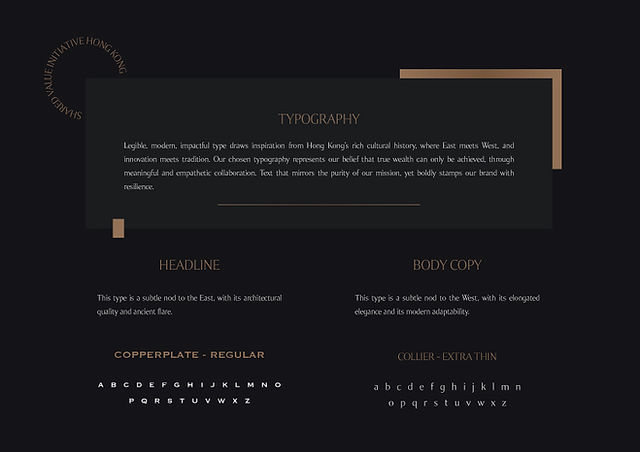
Our approach focused on creating a brand identity and visual system capable of expressing balance, partnership, and mutual benefit. Drawing inspiration from cultural symbolism rooted in Hong Kong and China, the koi fish became a central motif representing harmony, abundance, resilience, and collaboration. Every element of the identity was designed to support a larger narrative: that meaningful progress is often achieved when organisations work together rather than in isolation.

While the design itself was important, the broader lesson extended beyond visual identity.
The most effective brands do more than communicate what an organisation does. They help people understand why it matters.
This becomes particularly important for organisations operating at the intersection of commerce and impact. When purpose is communicated without commercial relevance, it can feel idealistic. When profit is communicated without purpose, it can feel transactional. The challenge lies in creating a narrative where both can coexist authentically and reinforce one another.
Increasingly, this is where many of the world's most influential organisations are choosing to operate.





The businesses shaping the future are often those that understand their success is connected to the success of the communities, ecosystems, and stakeholders they serve. They recognise that value can be created across multiple dimensions simultaneously, generating positive outcomes for business, society, and the environment alike.
The Shared Value Project reinforced a principle that continues to shape our approach to strategy and brand building.
Design is not simply a tool for visibility. It is a tool for alignment.
When organisations align purpose with action, and values with business objectives, brands become more than commercial entities. They become platforms for meaningful progress, capable of inspiring collaboration, trust, and long-term impact.
Perhaps the most exciting opportunities emerge when purpose and profit stop competing and start working together.